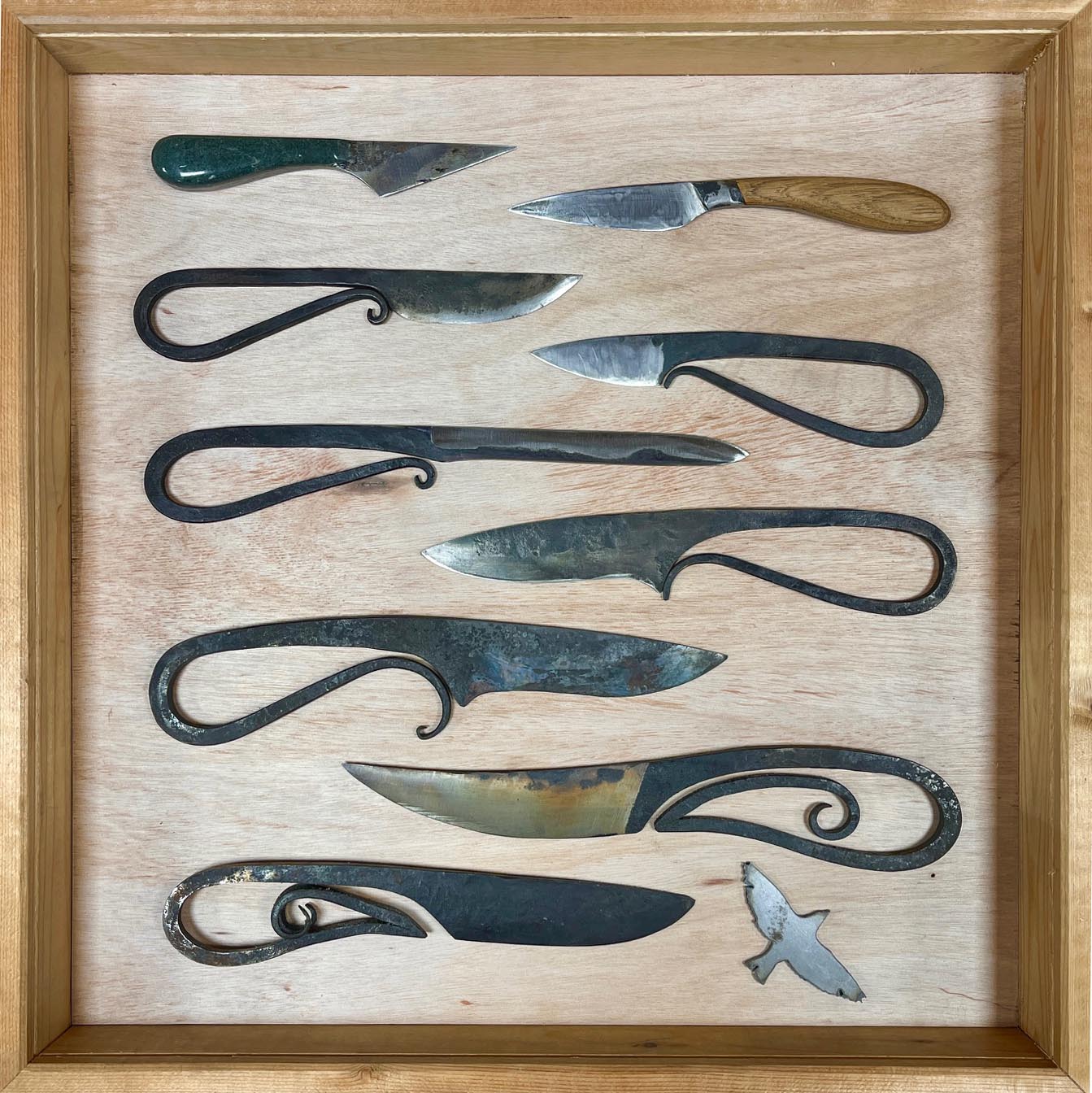
Periodically I make a knife and over the years I’ve ended up making a few, sometimes for mates and sometimes as a thank you to those people who have put aside interesting materials for me to forge with or recycle.
So far I’ve not advertised or sold a knife, so if you did want one you would have to get in touch and commission it, just don’t ask for a pattern damascus, this is a whole new world of pain I don’t have time for at the moment. Another reason for not pushing blade sales is that I have not gone into the technical aspects of hardening and heat treating, professional bladesmiths spend years developing their processes to create the best blend of strength and hardness to get sharp but durable blades from their favourite types of steel – and there are many steel types. Conversely – I recycle things like coil springs, machine parts, bearing casings and drill bits, I quench polish and sharpen, which gets a good blade, but not a great blade a chef would use everyday.
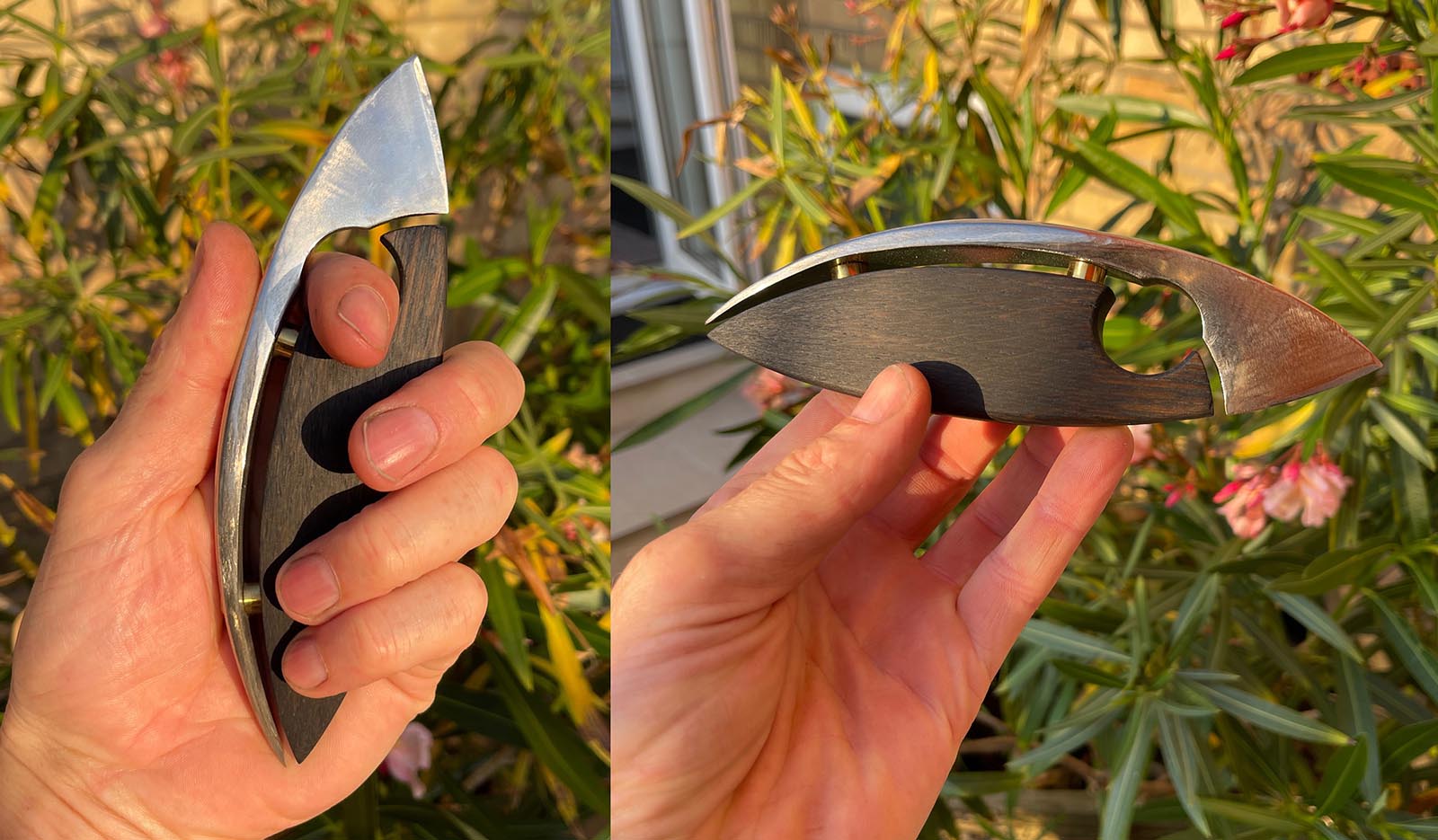
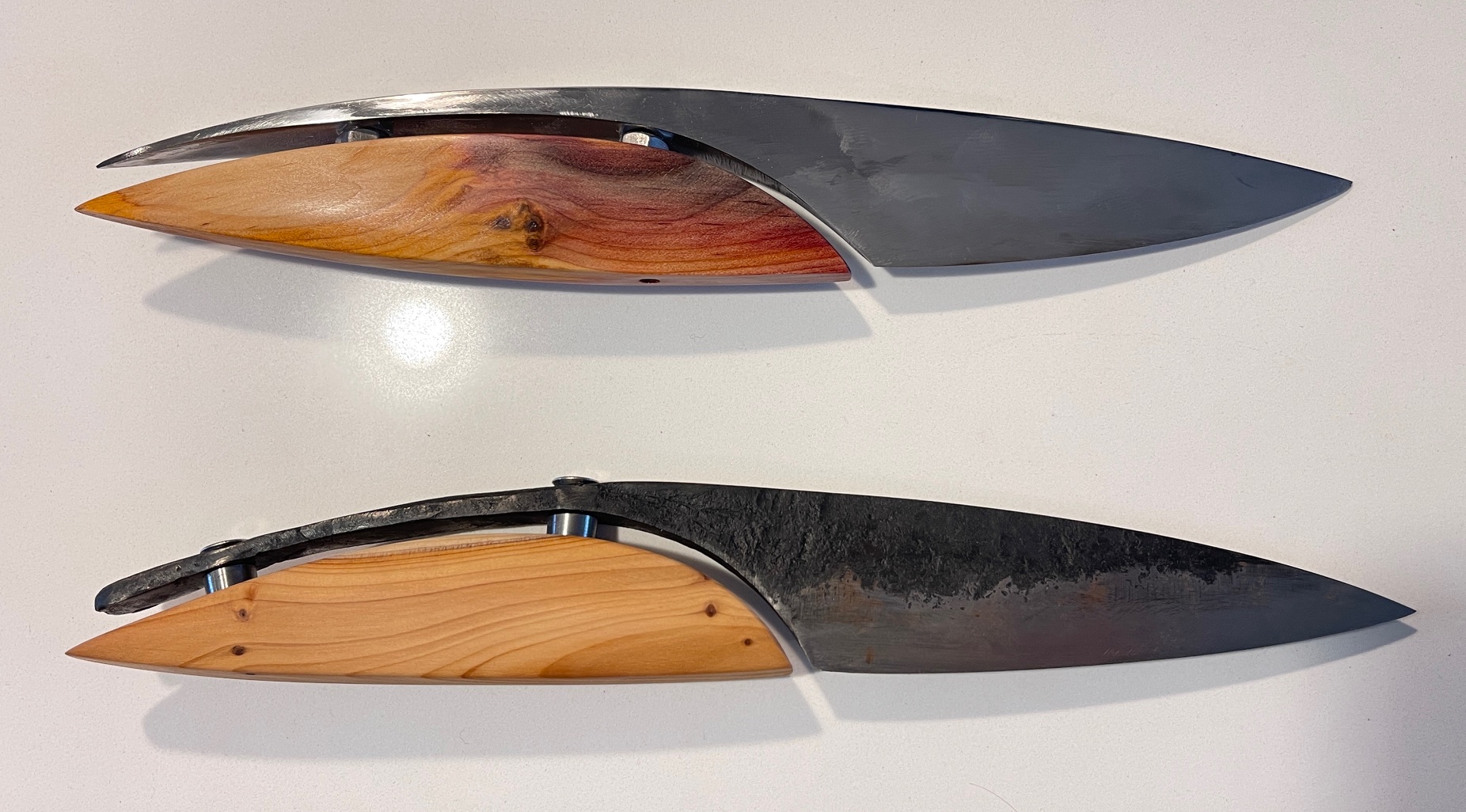
I’ve made the knives you see here because they were a challenge to make something new and to push myself in a slightly different direction as a blacksmith, random ideas arive and I execute them, this is why one or two of the blades you will not have seen anywhere else, the floating handle design I’ve not seen before and whilst I’ve made three or four of these I have many more designs sketched that I may oneday produce.
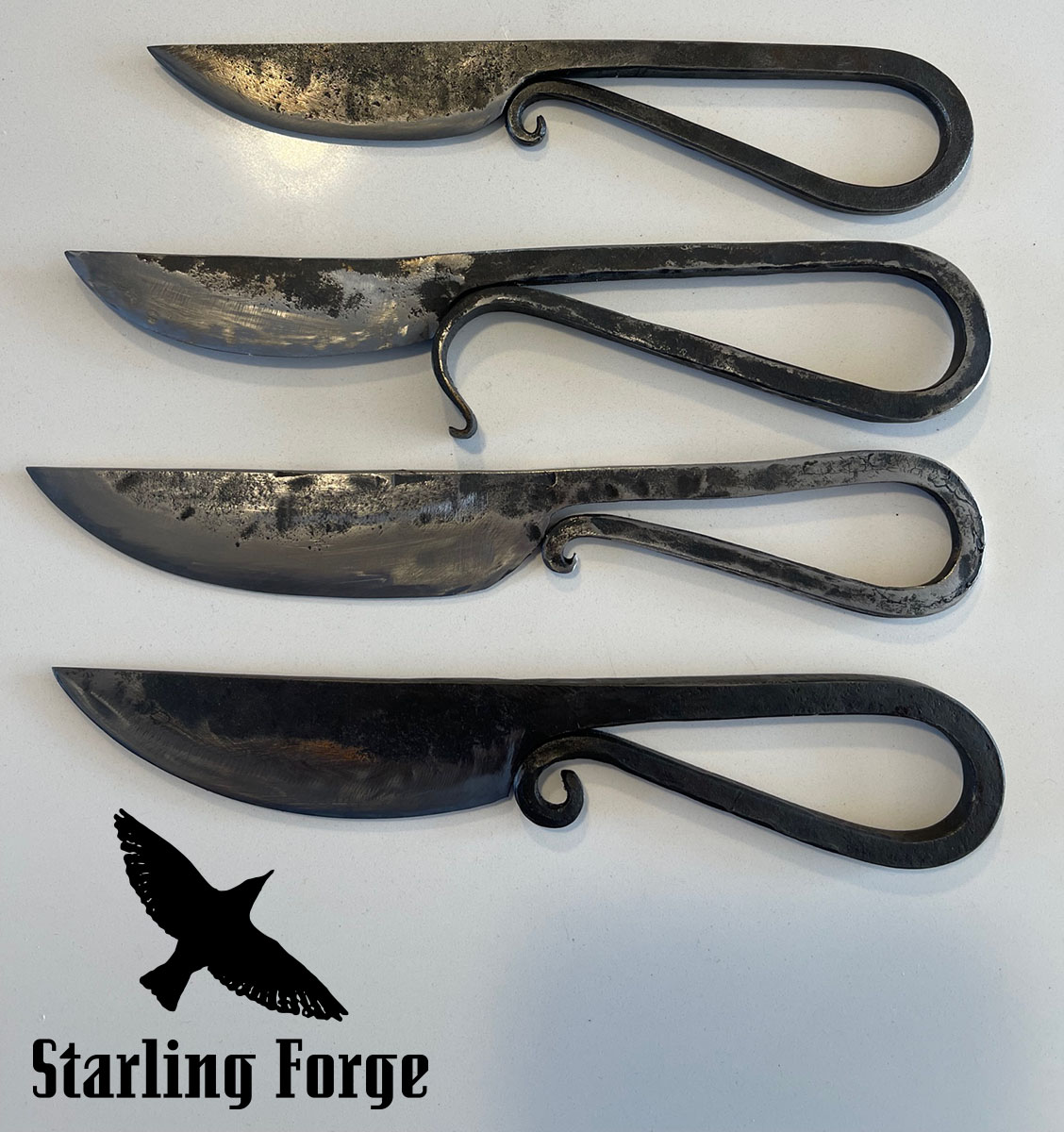
Variations on the Blacksmith’s Knife or Viking Knives:
My first two Floating Handle variants, the top one being second and closer to my original thought:
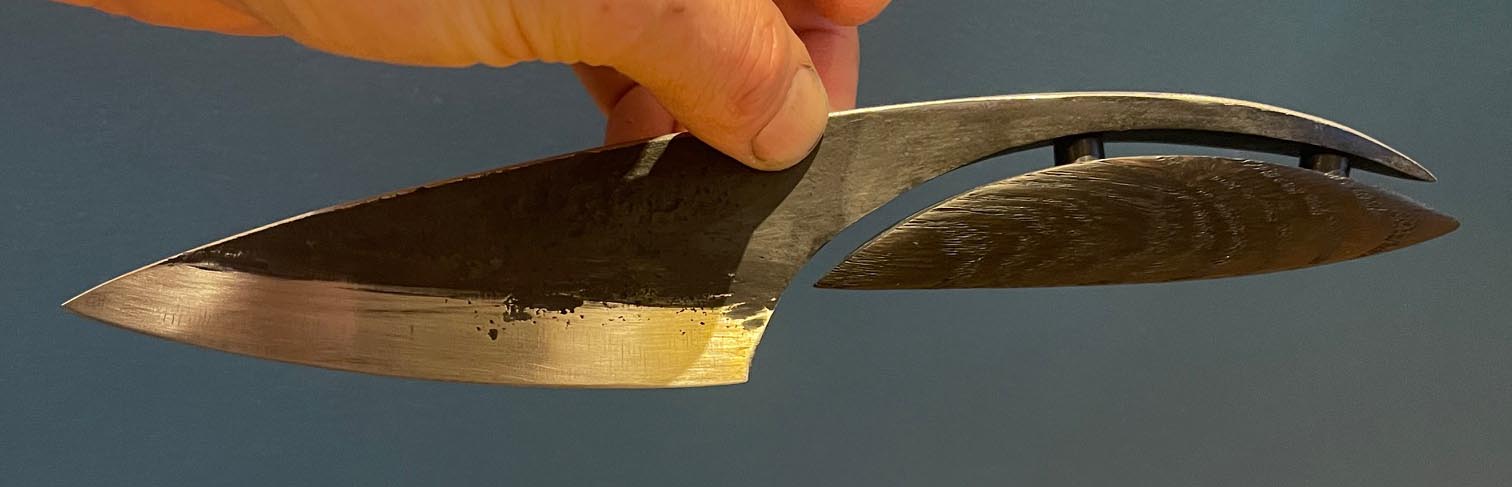
My third floating handle design, made for more kitchen work so space below the handle for knuckles on a worktop:
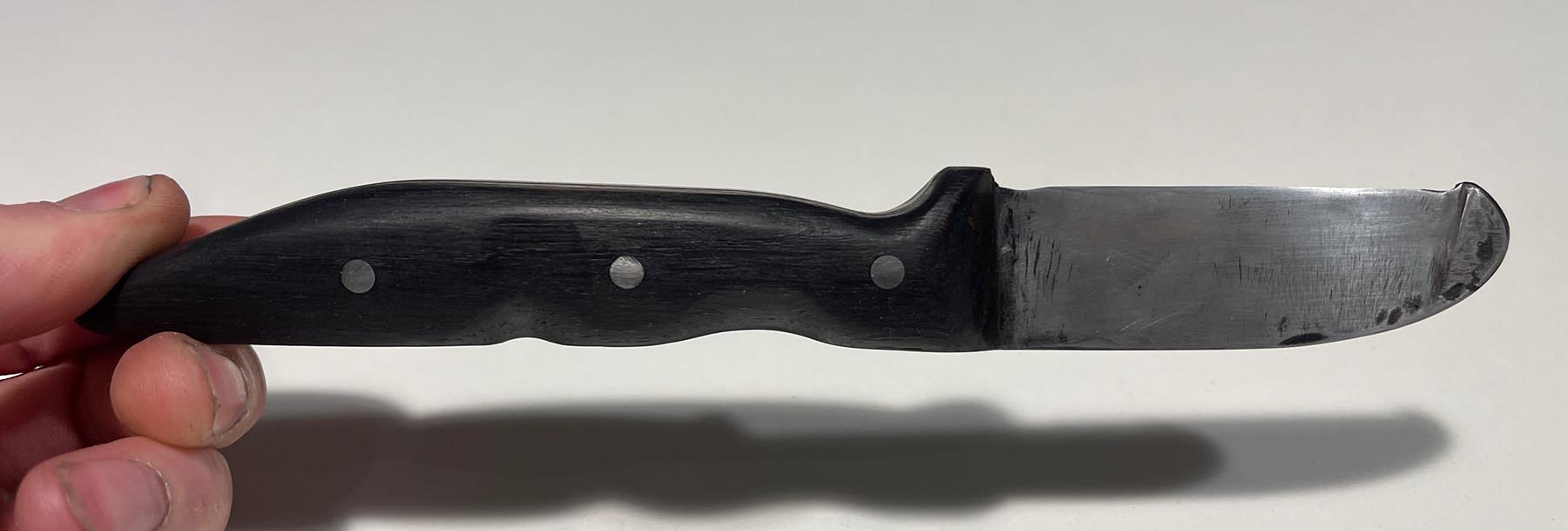
My Gralloching knife, (Gralloching is the hygienic, immediate removal of a deer’s internal organs (entrails) to prevent meat contamination), the tip of this one is blunt, thick and rounded so that when cutting the belly you don’t pierce the internals that contaminate. The handle has a deep indent for locating your thumb, this stops it sliding forward onto the blade in a slippery environment which could be dark and out of sight, the blade is generally drawn upwards:
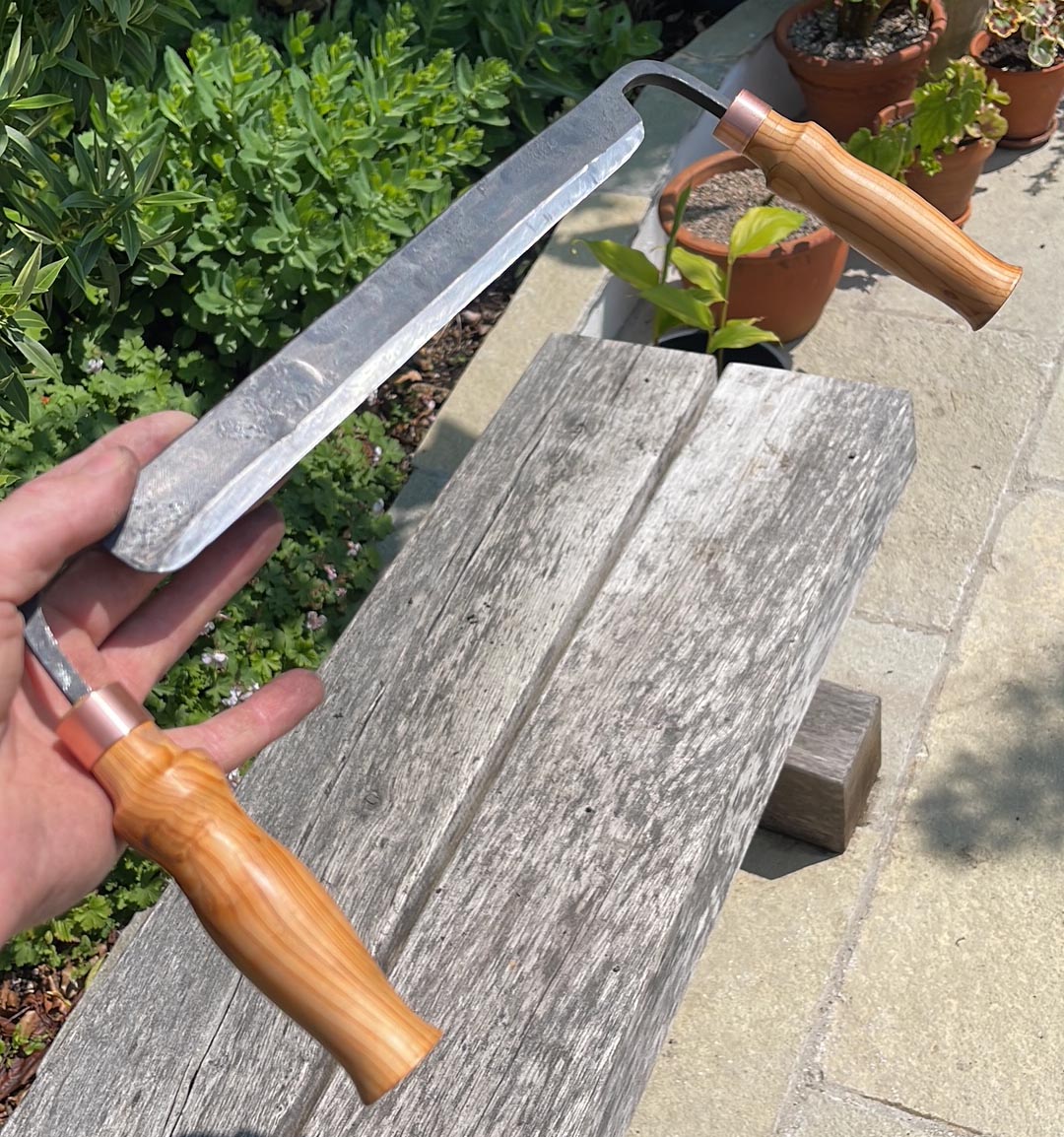
This is a Drawknife, a traditional two-handed woodworking tool used to quickly remove large amounts of wood, shape stock, or debark timber by drawing the blade towards the user. Consisting of a long, sharp bevel-edged blade with handles at both ends, it is commonly used on a shaving horse for control:
A Tanto style heavy duty knife, designed for general camping duties like cooking, chopping, hunting, wood splitting etc. It has a 5mm thick blade and I got a little bit obsessed with consistent 45º angles:
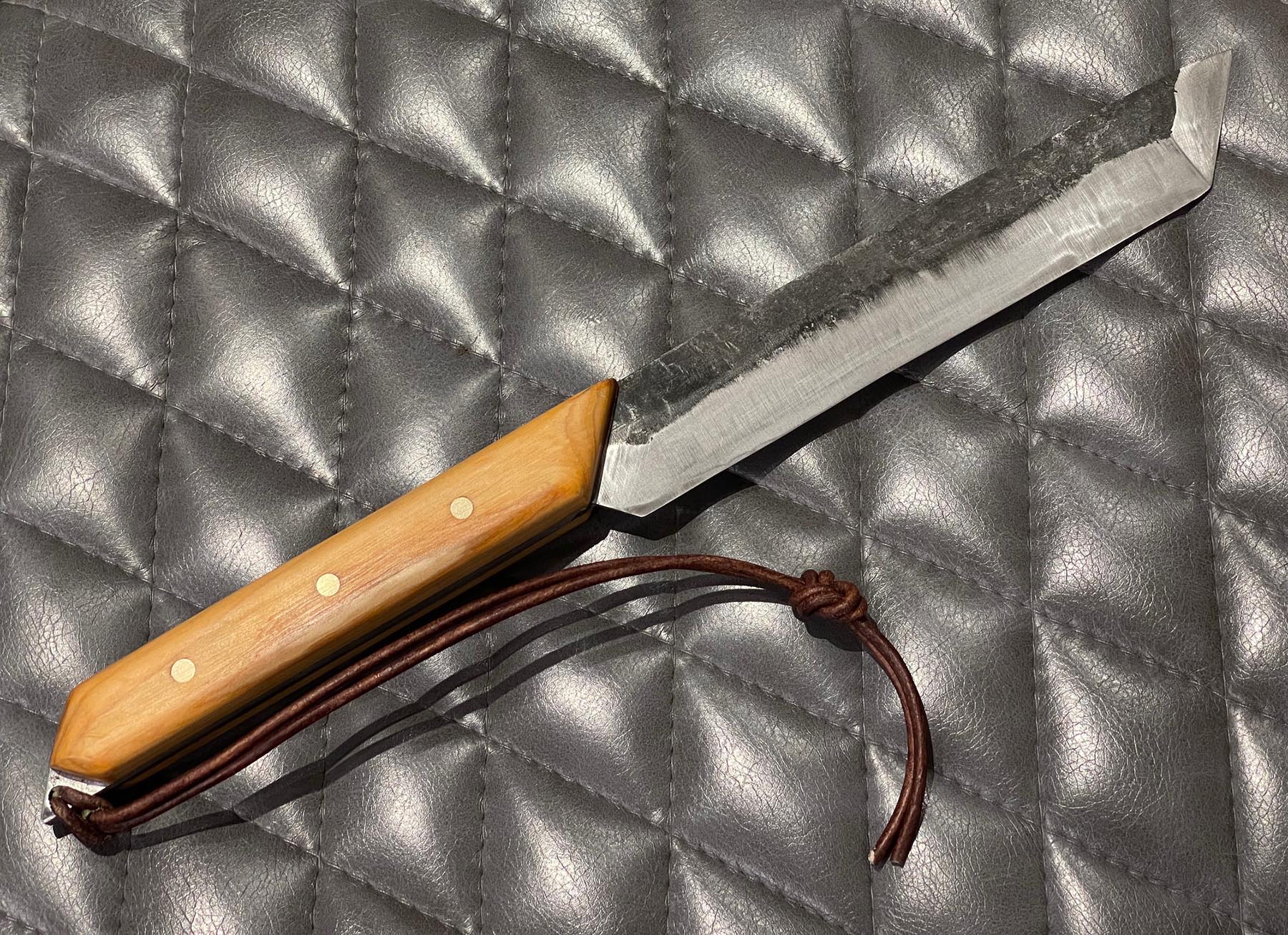
A small cutting blade based on nothing I’ve seen before: